
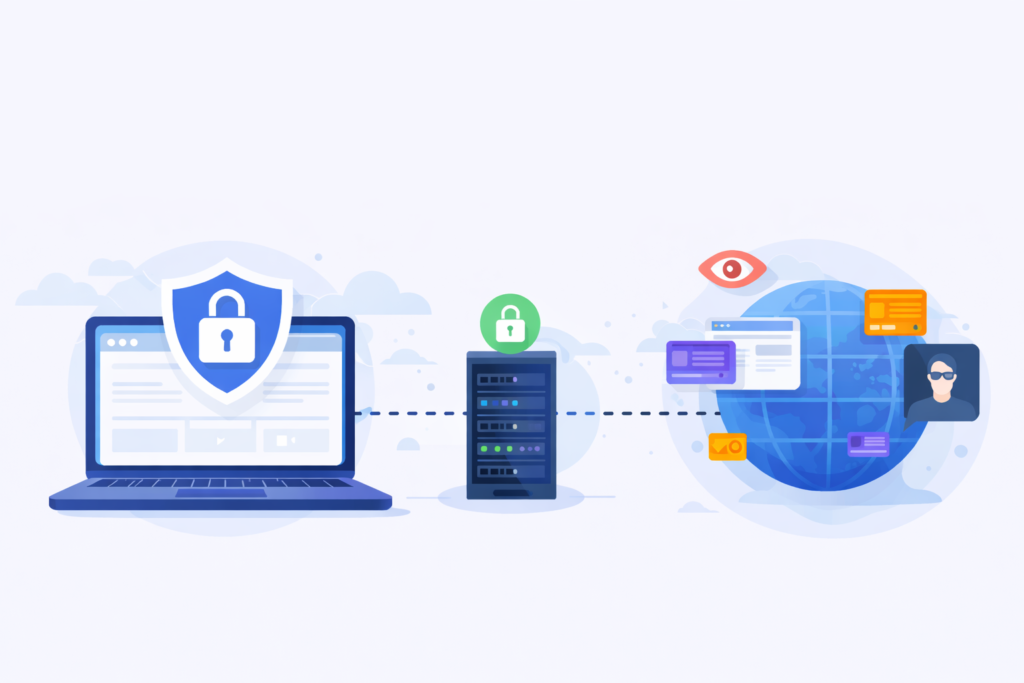
A VPN (Virtual Private Network) is a tool that helps protect your online privacy by encrypting your internet connection and hiding your real IP address.
In 2026, online tracking, data collection, and public Wi-Fi risks are more common than ever. A VPN helps reduce these risks by securing your connection and keeping your online activity private.
In this guide, you’ll learn what a VPN is, how it works, and whether you really need one today.
Why People Use a VPN in 2026
People use VPNs for many reasons, but the main goal remains the same: protecting their online privacy.
In 2026, internet users face increased tracking, data collection, and security risks. Internet service providers, websites, advertisers, and even public Wi-Fi networks can monitor or expose personal information. A VPN helps reduce these risks by encrypting your connection and masking your real IP address.
VPNs are also widely used to access content safely while traveling, secure connections on public Wi-Fi, and maintain privacy when browsing on multiple devices.
How Does a VPN Work?
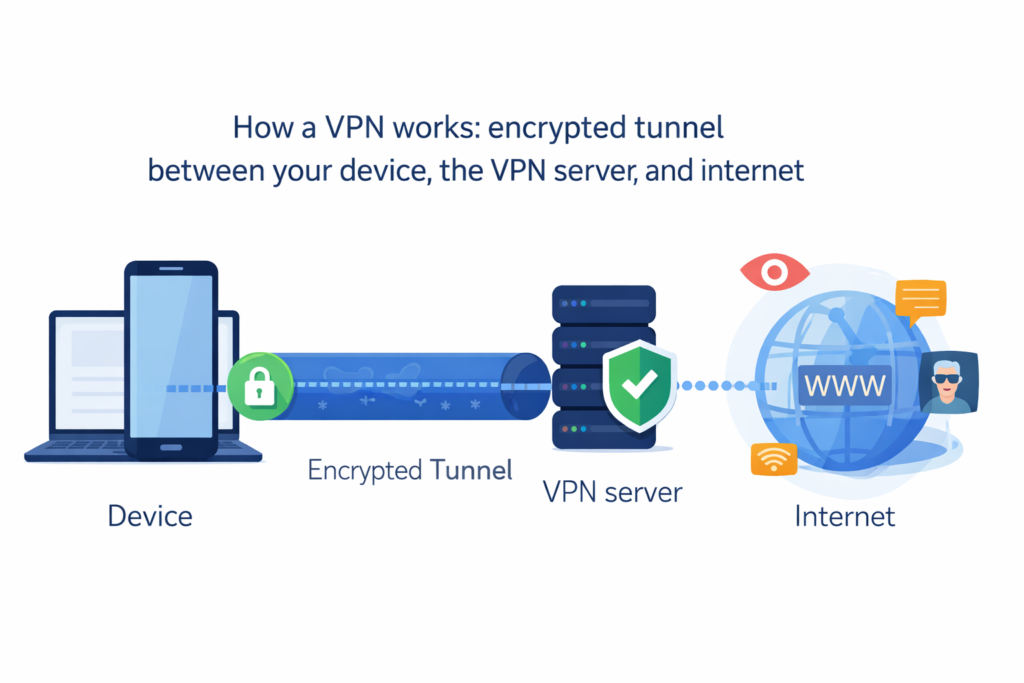
When you connect to a VPN, your internet traffic is routed through a secure server operated by the VPN provider.
Before your data leaves your device, it is encrypted, making it unreadable to third parties such as hackers, internet service providers, or public Wi-Fi networks.
In simple terms:
- Your data is encrypted before leaving your device
- Your real IP address is hidden
- Websites see the VPN server’s IP instead of yours
Instead of connecting directly to a website or online service, your connection passes through the VPN server. As a result, websites and services see the VPN server’s IP address rather than your real location.
This process helps protect your privacy, secure your connection on public Wi-Fi, and reduce online tracking.
What Does a VPN Protect You From?
A VPN helps protect you from several common online risks that internet users face every day.
Without a VPN, your internet activity can be monitored by your internet service provider (ISP), advertisers, or anyone connected to the same public Wi-Fi network.
A VPN helps protect you from:
- Tracking by websites and advertisers
- Monitoring by your internet service provider (ISP)
- Data interception on public Wi-Fi networks
- Exposure of your real IP address and location
By encrypting your connection, a VPN makes it significantly harder for third parties to see what you do online or collect sensitive information about you.
Common VPN Use Cases
VPNs are commonly used in everyday situations where privacy and security matter.
Many people use a VPN on public Wi-Fi networks in places like hotels, airports, and cafés to protect their data from potential hackers. Others rely on VPNs while traveling to keep their internet connection secure and access online services safely from different countries.
VPNs are also used to improve online privacy at home, reduce tracking by websites and advertisers, and protect multiple devices such as smartphones, laptops, and tablets.
Are VPNs Legal?
In most countries, using a VPN is completely legal and commonly used for privacy and security purposes.
However, VPN laws can vary depending on the country. Some regions restrict or regulate VPN usage, while others allow it without limitations.
It is important to note that using a VPN does not make illegal activities legal. VPNs are intended to protect privacy, not to bypass laws.
If you are traveling, it is always recommended to check local regulations regarding VPN usage.
Do You Need a VPN in 2026?
For many internet users, using a VPN in 2026 is a practical way to improve online privacy and security.
With increased tracking, data collection, and frequent use of public Wi-Fi networks, a VPN can help protect personal information and reduce online exposure.
A VPN can be especially useful if you:
- Use public Wi-Fi networks regularly
- Want to limit online tracking and data collection
- Travel frequently or access the internet from different locations
- Value privacy and security while browsing online
Frequently Asked Questions About VPNs
Does a VPN slow down your internet speed?
A VPN can slightly reduce internet speed because your data is encrypted and routed through a secure server.
However, with a reliable VPN provider, the difference is usually minimal and not noticeable for everyday browsing or streaming.
Can a VPN hide your activity from your internet service provider?
A VPN encrypts your internet traffic, which prevents your internet service provider from seeing the websites you visit.
Your ISP can still see that you are using a VPN, but not what you are doing online.
Is it safe to use a VPN every day?
Yes. Using a VPN daily is generally safe and can help improve privacy, especially on public Wi-Fi networks.
Many users keep their VPN enabled at all times to reduce tracking and protect their connection.
If you’re looking for a reliable VPN, you can check our comparison of the best VPN services to find the option that fits your needs.
This page is for informational purposes only. Some links on this website may be affiliate links. You can learn more on our Affiliate Disclaimer page.